What Are the Most Common Indoor Air Pollutants? Part 3
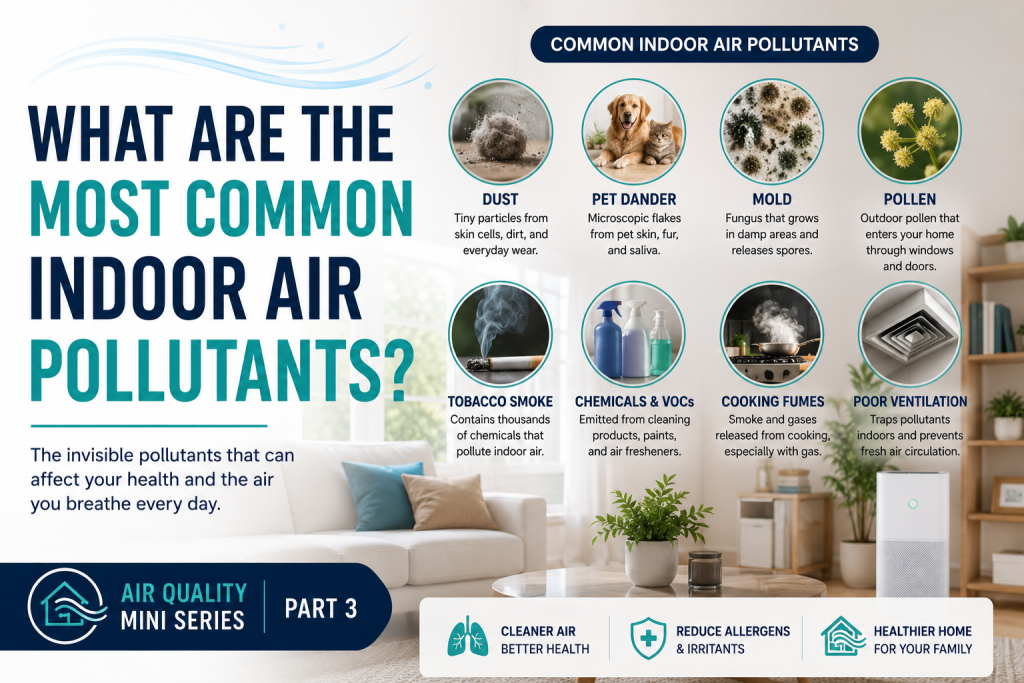
Indoor air pollution isn’t one single substance. Depending on the property and what’s happening inside or around it, indoor air may be affected by particles, biological contaminants, gases, smoke, moisture-related problems, and other pollutants.
In Part 3 of our Indoor Air Quality Guide, we’ll look at several common indoor pollutants, possible sources, signs that may deserve investigation, and why some concerns require proper testing rather than relying on what you can see or smell.
Navigation
INDOOR AIR QUALITY GUIDE · PART 3 OF 7
← Part 2: What Causes Poor IAQ? | Start at Part 1 | Part 4: Can You Test IAQ? →
Indoor environments can contain many different pollutants. Some important examples include:
| Pollutant or concern | Possible indoor sources |
| Particulate matter | Cooking, dust, smoke, combustion, outdoor air |
| Mold | Moisture, leaks, damp materials, high humidity |
| Pet allergens | Pets, household dust, fabrics and surfaces |
| Pollen | Outdoor air, open windows/doors, tracked-in material |
| VOCs | Certain products, paints, finishes, furnishings and building materials |
| Carbon monoxide | Improperly vented or malfunctioning combustion sources |
| Nitrogen dioxide | Combustion sources |
| Radon | Soil gas entering through building openings |
| Smoke | Tobacco, wildfire smoke, cooking and other combustion |
EPA identifies carbon monoxide, smoke, radon, mold, particulate matter, and VOCs among common indoor pollutants.
One distinction is especially important:
Not every indoor pollutant can be seen, smelled, or removed through ordinary cleaning.
Radon, for example, cannot be identified simply by looking around a room. Carbon monoxide requires appropriate alarms/detection. Problems involving combustion systems, asbestos, lead, or significant mold or moisture conditions may require qualified professionals rather than ordinary cleaning.
How Do You Know If Your Home Has an Indoor Air Quality Problem?
There isn’t one universal sign of poor indoor air quality.
Some conditions may be noticeable, while others require testing or specialized detection.
Conditions you may notice
Potential clues worth investigating can include:
- persistent or unusual odors;
- rooms that regularly feel stale or stuffy;
- excessive dust or particles;
- condensation on windows, walls, or pipes;
- visible moisture problems;
- recurring mold or mildew;
- smoke or combustion concerns; and
- noticeable changes following painting, remodeling, new furnishings, or other activities.
EPA identifies stuffy air, condensation on cold surfaces, and mold or mildew growth among signs that can indicate inadequate ventilation or moisture-related concerns during remodeling.
These signs don’t diagnose a particular pollutant. They tell you that the source or building condition may deserve investigation.
Sources worth investigating
Think about what’s happening inside and around the property.
Has there been a leak?
Was a room recently painted?
Is construction underway?
Does cooking create visible smoke?
Is a fuel-burning appliance properly vented?
Has humidity been unusually high?
Are there several pets?
Is outdoor smoke entering the property?
Identifying what changed can sometimes help narrow down the source.
Problems that require testing or detection
Some concerns cannot be evaluated reliably with human senses.
EPA recommends that homes be tested for radon and have functioning carbon monoxide and smoke alarms.
A generic consumer “air quality monitor” also doesn’t necessarily test for every possible indoor pollutant.
Different Indoor Problems Require Different Solutions
Cleaning can help with ordinary dust and buildup, but it cannot identify every indoor pollutant or replace specialized testing, remediation, or mechanical repairs. Sweep N Glow focuses on the professional cleaning side of property care while recognizing when an indoor environmental concern falls outside the scope of ordinary cleaning.
Learn More About Sweep N Glow, a Professional Cleaning Company for Connecticut Businesses →
Continue the Indoor Air Quality Guide
Some indoor-air concerns can be observed, while others require measurement or specialized detection. So how do you actually test the air in a home, and what can different tests tell you?