Indoor Air Quality Around the Home: Room-by-Room Challenges – Part 6
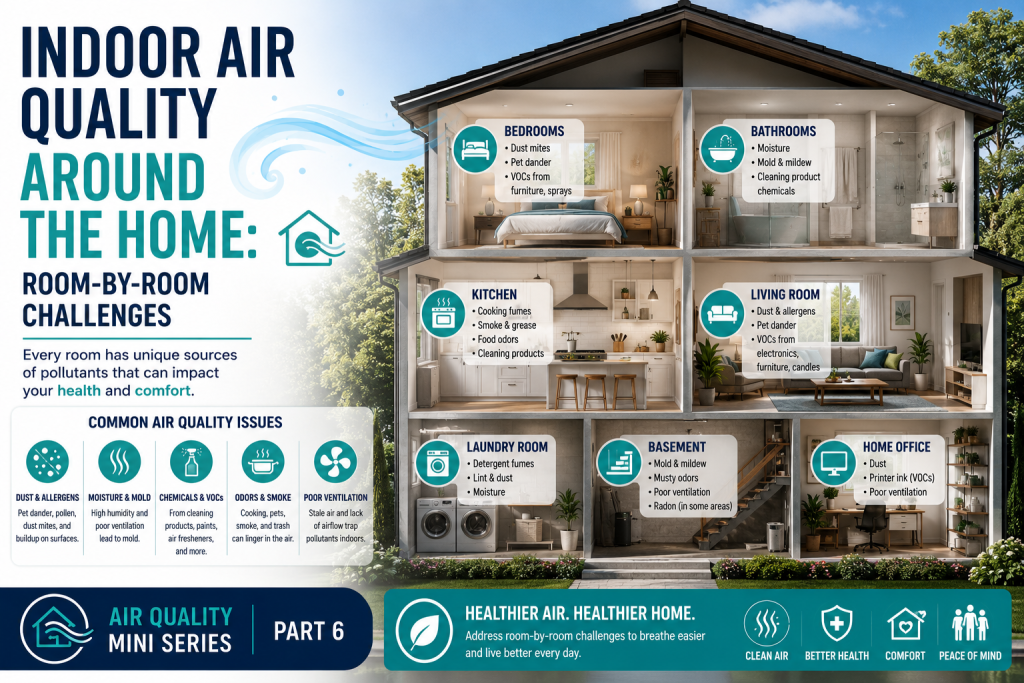
Indoor air quality can vary from one room to another, even inside the same home. A bedroom may have concerns involving bedding, fabrics, pets, and dust, while a kitchen introduces cooking particles and combustion. Bathrooms bring moisture into the equation, and basements may present concerns involving ground moisture and radon.
In Part 6 of our Indoor Air Quality Guide, we’ll take a room-by-room look at these differences before exploring renovation, seasonal changes, and situations where an indoor air-quality professional may be appropriate.
Navigation
INDOOR AIR QUALITY GUIDE · PART 6 OF 7
← Part 5: Cleaning & IAQ | Start at Part 1 | Part 7: IAQ FAQs →
Different rooms create different IAQ challenges.
Bedrooms
Bedding, mattresses, carpets, pets, fabrics, dust, ventilation, and humidity can all influence the bedroom environment.
Read: How to Improve Bedroom Air Quality [Internal link]
Kitchens
Cooking can produce particles and combustion pollutants, while moisture, waste, cleaning products, and gas appliances can introduce additional considerations.
Using a kitchen exhaust fan that vents outdoors can help remove cooking-related contaminants near their source.
Bathrooms
Bathrooms combine moisture, humidity, warm surfaces, and frequent water use.
Effective exhaust ventilation and prompt attention to moisture problems can help control conditions favorable to mold and other biological contaminants.
Basements
Basements deserve particular attention because of their relationship with ground moisture and radon.
EPA recommends checking basement areas for moisture problems before converting them into living space and testing for radon at the lowest lived-in level.
Read: How to Improve Basement Air Quality [Internal link]
Living areas
Living rooms and family spaces can accumulate dust, pet material, outdoor particles, and material from upholstered furniture, rugs, electronics, and everyday activity.
Regular maintenance can help control what accumulates on these surfaces.
Apartments and condos
Multifamily living introduces additional considerations because residents may have less control over building-wide ventilation, neighboring sources, common spaces, and certain maintenance systems.
Read: How to Improve Indoor Air Quality in an Apartment [Internal link]
Indoor Air Quality During Construction and Renovation
Renovation can temporarily change the indoor environment dramatically.
Demolition, drywall work, sanding, painting, flooring, adhesives, sealants, and newly installed materials can generate dust, particles, or VOCs. Remodeling can also disturb existing materials.
Planning should therefore begin before the dust starts flying.
Depending on the project, appropriate measures can include isolating work areas, controlling dust at its source, protecting occupied portions of the property, providing appropriate ventilation, and cleaning construction residue before normal occupancy resumes.
Projects involving possible asbestos, lead, significant mold, or other hazardous materials require specialized procedures rather than ordinary post-construction cleaning.
Explore: Construction & Renovation → Drywall & Construction Dust → Post-Construction Cleanup [Internal links]
How the Seasons Can Affect Indoor Air Quality
Indoor conditions change throughout the year.
Spring can bring substantial outdoor pollen.
Summer can increase indoor humidity and moisture concerns.
Fall introduces leaves, outdoor debris, changing temperatures, and the beginning of heating season.
Winter often means homes remain closed for longer periods while heating systems and combustion sources receive more use.
For Connecticut properties, those seasonal changes create an especially useful subject that deserves its own guide rather than being forced into this national IAQ overview.
Read next: How Connecticut’s Seasons Can Affect Indoor Air Quality [Internal link]
When Should You Call an Indoor Air Quality Professional?
Ordinary cleaning isn’t the appropriate response to every indoor environmental concern.
Professional evaluation may be worth considering when you’re dealing with a specific suspected pollutant, persistent unexplained conditions, significant moisture or mold concerns, combustion problems, or circumstances requiring specialized sampling or testing.
Different problems require different professionals.
An HVAC contractor, radon professional, environmental consultant, mold professional, industrial hygienist, plumber, remediation contractor, or other specialist may be appropriate depending on the issue.
Sweep N Glow provides cleaning services; it is not an indoor environmental testing laboratory, HVAC contractor, or environmental remediation company.
That distinction matters because identifying the correct problem should come before choosing the solution.
Different Spaces Can Require Different Levels of Care
The needs of a regularly maintained home can be very different from those of a property after construction, during a move, or when buildup has accumulated over time. Sweep N Glow provides residential, detailed, move-in/move-out, and post-construction cleaning options for Connecticut properties based on the type of cleaning the space requires.
Explore Sweep N Glow Cleaning Services in Fairfield County →
Finish the Indoor Air Quality Guide
We’ve covered the fundamentals, pollutant sources, testing, improvement strategies, cleaning, and room-by-room concerns. In the final part, we’ll bring the major ideas together by answering common questions about indoor air quality.
Next: Part 7 – Frequently Asked Questions About Indoor Air Quality →