THE FIRST FIVE FEETThe First Five Feet Matter More Than You Think
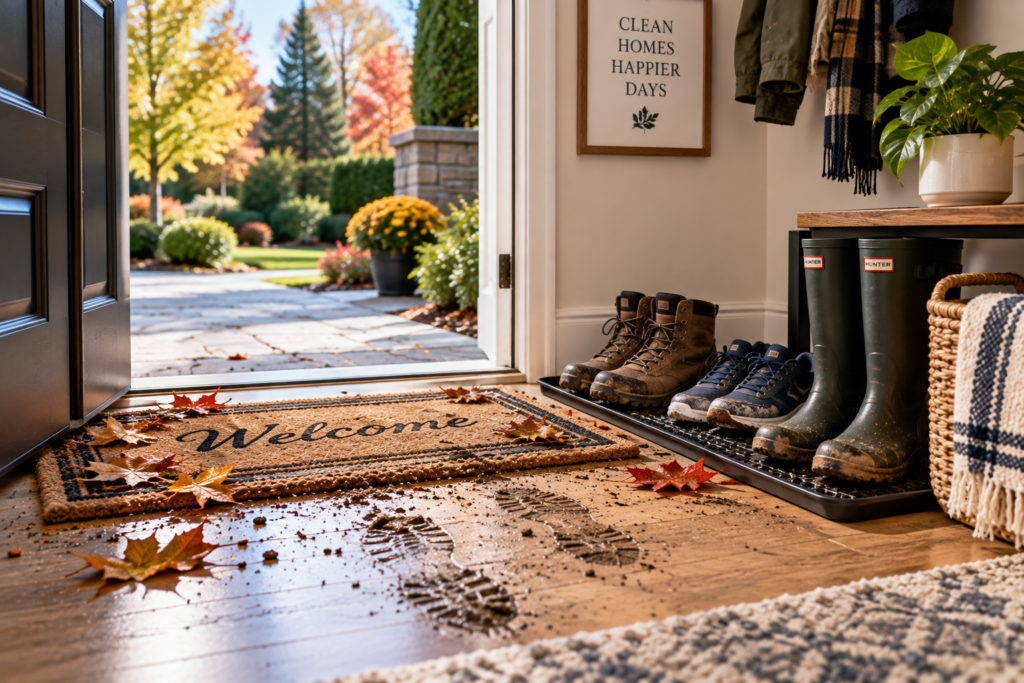
The area immediately inside an entrance can influence cleaning throughout the rest of the home. A shoe touches the mat, then the floor, then another floor surface. Perhaps the person turns toward the kitchen or walks upstairs.
Each contact creates another opportunity for material to remain behind or continue traveling. Understanding those first few feet can help explain what later appears farther inside.
BEYOND THE DOORWhy Dirt Doesn't Stay at the Door
Outdoor material does not make a decision to remain near the entrance. A particle may stick to the bottom of a shoe until several steps later. Moisture can make fine debris adhere longer, while pets and objects create additional routes.
Once material crosses the threshold, the household itself can become the transportation system. Cleaning the entrance is important, but it may not address everything that already traveled beyond it.
CONNECTING SPACESHallways Are More Than Empty Space
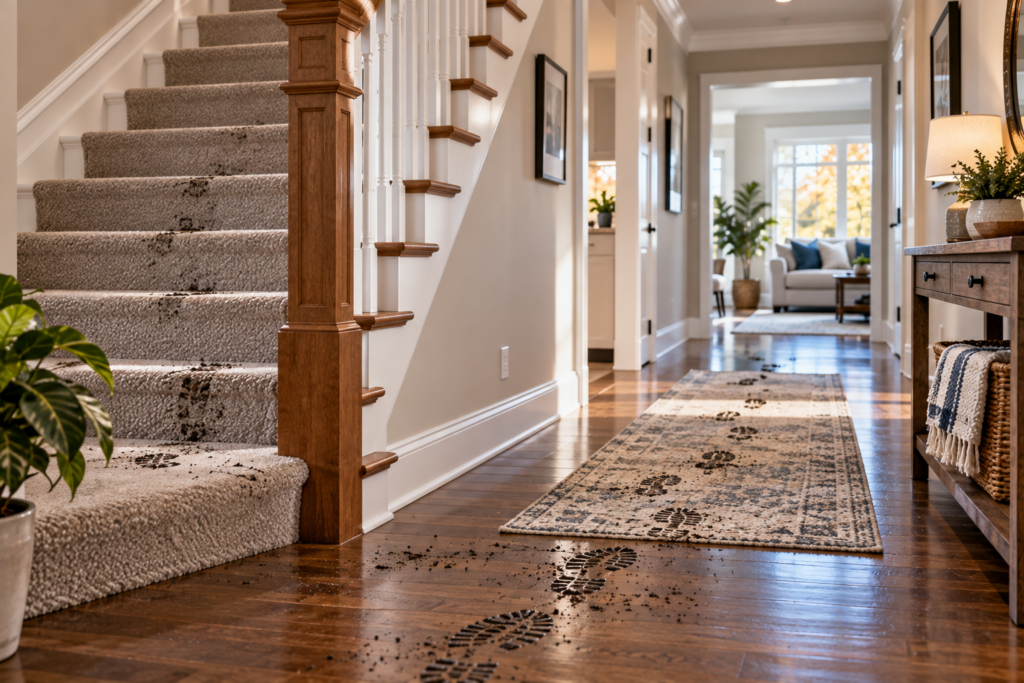
Hallways often receive less attention than kitchens, bathrooms, and living rooms because people do not spend much time sitting or working in them. But people move through them constantly.
A hallway connecting an entrance to the kitchen may receive outdoor material carried by footwear, while bedroom hallways can collect fibers, hair, and dust from everyday routines.
MOVEMENT BETWEEN FLOORSStairs Connect Cleaning Problems Too
A staircase is essentially a vertical hallway. Whatever reaches the bottom can begin moving upward, and whatever develops upstairs can move downward.
Hair may collect along stair edges, fine debris can settle into corners, and carpeted stairs can hold particles differently from hard surfaces. Railings also receive repeated hand contact.
FOOD MOVEMENTThe Kitchen Creates More Than Kitchen Messes
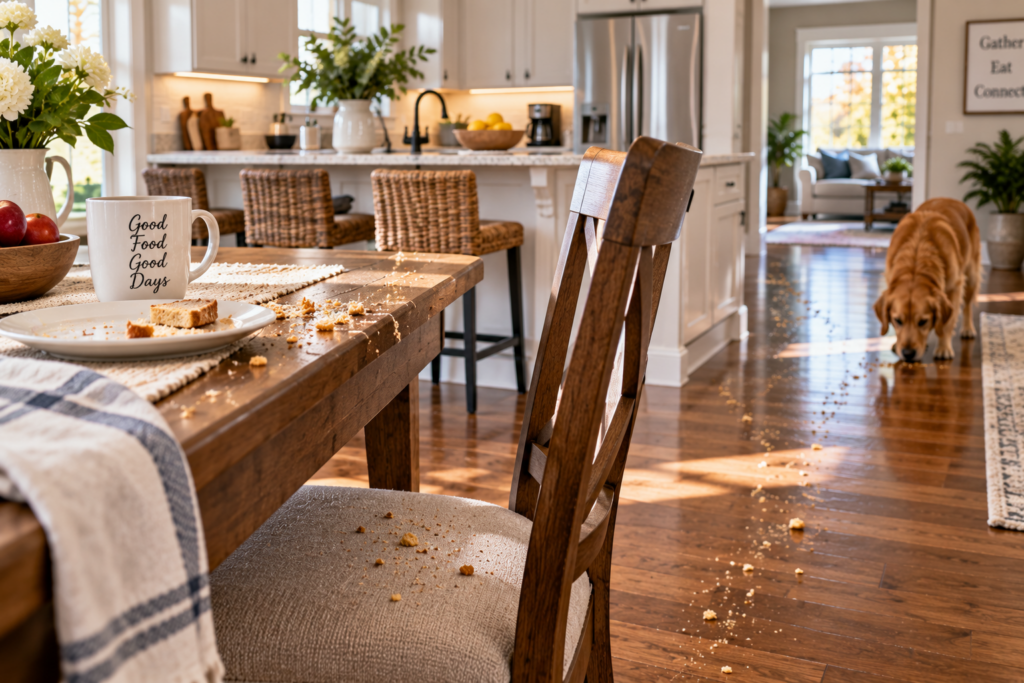
Food preparation creates crumbs and small particles. Cooking can leave residue on nearby surfaces. Chairs move, and people walk between counters, tables, refrigerators, sinks, and other areas.
Then someone leaves the kitchen. A snack may travel with them, a dish may go elsewhere, or children may eat in another room. The kitchen may be where food-related material originates, but not where all of it remains.
CRUMB ROUTESCrumbs Have Surprisingly Long Travel Routes
A crumb may fall onto a chair, then clothing, then the floor. A sock or slipper may move it farther. A pet may disturb it. Furniture may conceal it until the furniture is moved.
This helps explain why food particles can appear in places where nobody remembers eating. The route between eating areas and the rest of the home can matter as much as the place where the crumb was found.
PET MOVEMENTPet Hair Doesn't Respect Room Boundaries
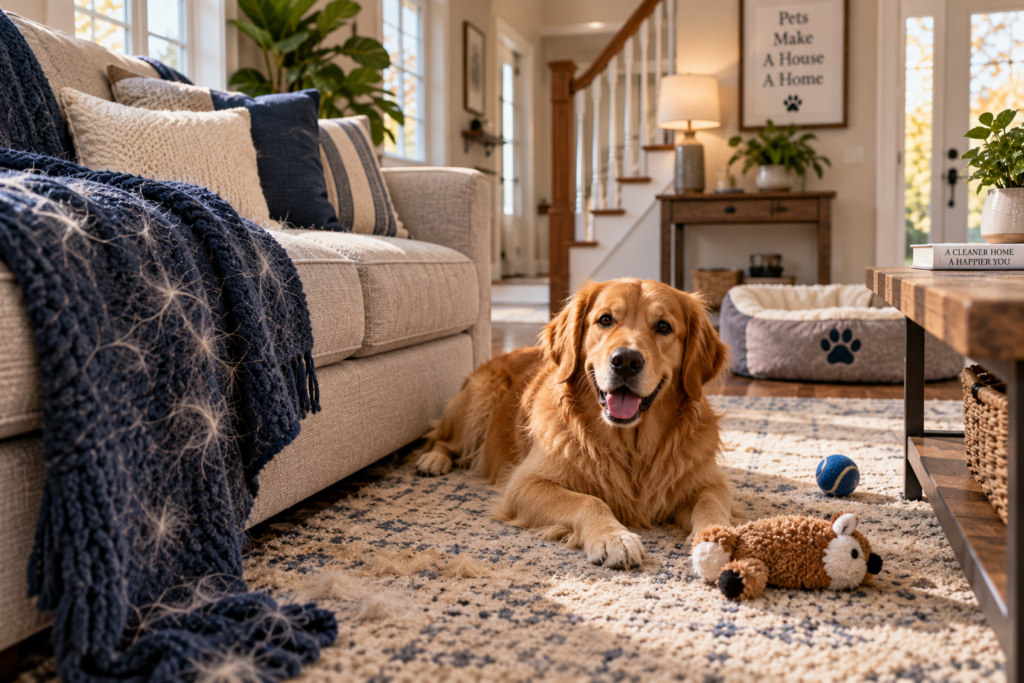
Pet hair can attach to clothing, collect on blankets, move when someone sits on upholstered furniture, and shift with air currents or ordinary household activity.
This means pet-related cleaning often extends beyond a pet's favorite spaces. The route may include floors, furniture, stairs, hallways, baseboards, bedding, and other fabrics throughout the home.
FABRIC AND FIBERSSoft Surfaces Can Become Temporary Storage
Carpet, rugs, upholstered furniture, blankets, bedding, curtains, and other fabrics interact with household material differently from hard surfaces. Hair can become caught in fibers, lint can settle, and fine particles may remain less visible.
When someone sits down, folds a blanket, walks across a rug, or changes bedding, settled material can move again. A soft surface can become a temporary stopping point rather than the final destination.
AIR MOVEMENTAir Movement Changes Where Fine Dust Settles
Not everything travels because someone stepped on it. Heating and cooling systems create airflow. Doors open and close. Windows may be opened. Ceiling fans operate, and people move through rooms.
Eventually fine particles settle again. That helps explain why dust can appear on shelves or along room edges that receive very little direct traffic.
READING THE FLOORSVacuuming Can Reveal the Household's Traffic Map
Floor cleaning can reveal patterns that are easy to overlook. Certain areas repeatedly collect more debris, edges may accumulate material differently, and the path between an entrance and kitchen may need attention sooner than a less frequently used area.
These differences provide clues about how the household actually moves, allowing cleaning to respond to the routes that receive the most traffic.
MORE THAN SHOESShoes Are Only One Way Outdoor Material Travels
Pet paws can carry material. A package can be placed on a porch and later brought inside. Reusable grocery bags may move between vehicles, stores, countertops, and floors.
Sports equipment, gardening supplies, and children's backpacks can also travel through several environments before being placed indoors. The cleaning picture extends well beyond whether shoes are worn inside.
EVERYDAY OBJECTSChildren, Bags & Everyday Objects Create Their Own Routes
A backpack might begin near the front door, move to a kitchen chair, travel upstairs, and eventually land on a bedroom floor. A handbag, laundry basket, or sports bag may follow its own route.
Objects can pick up and redistribute material each time they contact another surface. The household's traffic map includes more than footsteps.
FINDING THE SOURCECleaning the Destination Without Cleaning the Source
Suppose a hallway repeatedly becomes dirty. Cleaning the hallway solves the immediate problem, but if most of that material is entering through an adjacent garage entrance, the same pattern may quickly return.
The same idea applies to pet hair, crumbs, and dust. Cleaning the destination is necessary, while understanding the source can explain why the destination keeps needing attention.
INTERRUPTING THE ROUTEBreaking the Route Can Reduce Repeat Cleaning
Once a route becomes visible, there may be opportunities to interrupt it. A better entrance mat may capture more material. Shoes may be removed sooner. Pet paws may receive attention after certain outdoor activities.
Frequently transported objects may have designated storage areas, and high-traffic floors may receive attention more often than low-traffic spaces. The goal is to recognize where repeated movement is creating repeated cleaning work.