ACTIVITY DENSITYSquare Footage Doesn't Measure Activity
Square footage tells us how much physical space exists. It cannot tell us how many people use it, how often the kitchen is active, whether someone works from home, whether there are pets, or which entrance handles most traffic.
A property can be quiet or active at the same size. The number is identical. The cleaning environment is not.
CONCENTRATED LIVINGSmaller Spaces Can Concentrate More Use
A compact living area can contain seating, storage, electronics, a workspace, pet items, and family activity within a relatively small footprint.
The floor area may be limited while the number of surfaces, objects, and routines is not.
DISTRIBUTED LIVINGMore Rooms Can Spread Cleaning Needs Apart
Larger homes can distribute activity. The kitchen may receive constant use while a formal dining room remains quiet, and one bathroom may serve several people while another is reserved for guests.
Some areas change because they are used. Others change because time passes.
ACTIVITY PER SQUARE FOOTA Busy Small Room Can Outwork a Quiet Large Room
A compact bathroom used by several people can experience far more cleaning activity than a large guest bedroom used occasionally.
Physical size does not determine cleaning intensity. The relationship between activity and space often tells us more.
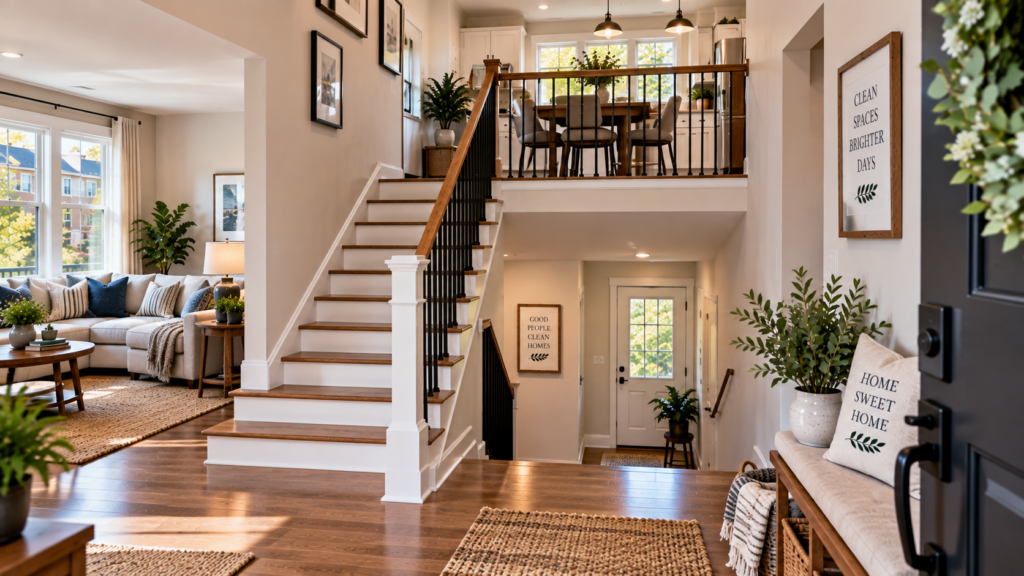
VERTICAL LIVINGStairs Change How Activity Is Distributed
Every trip upstairs or downstairs uses the same treads. Railings receive contact, landings become transition points, and objects carried between floors pass through the same route.
Vertical homes can concentrate movement within narrow pathways while distributing activity across several levels.
STORAGE DENSITYStorage Changes How Much Surface Is Actually Available
Shelving, bins, baskets, boxes, desks, exercise equipment, and household belongings create more edges, surfaces, and areas underneath.
Square footage measures the boundaries of the room. Storage influences what exists inside those boundaries.
FURNITURE DENSITYFurniture Changes Access Without Changing Room Size
Sofas, beds, dining tables, cabinets, and bookcases create spaces beneath, behind, around, and between objects.
The room keeps the same dimensions while its cleaning map becomes more complex.
ENTRANCE CONCENTRATIONOne Door Can Handle Most of a Household's Traffic
Residents, groceries, packages, pets, shoes, backpacks, and equipment may all pass through the same entrance even when a property has several exterior doors.
Cleaning patterns often follow the routes people actually use rather than every route the floor plan makes available.
SHARED BUILDINGSShared Buildings Add Activity Before You Reach the Front Door
Apartments and condominiums may involve shared entrances, corridors, elevators, stairways, lobbies, or garages before residents reach their individual homes.
The cleaning environment is shaped by both the individual residence and the way people reach it.
WORKING FROM HOMEA Workspace Can Change the Activity Level of an Entire Room
A bedroom, dining area, den, or living room can become an everyday workspace with chairs, desks, electronics, food or drinks, and additional floor traffic.
The room remains the same size while its daily activity increases.
MULTIPURPOSE ROOMSOne Room Can Perform Several Jobs
Dining rooms become homework areas, guest bedrooms become offices, basements become exercise and entertainment spaces, and kitchen islands support far more than food preparation.
The room may not become physically larger. It simply does more.
PEOPLE CHANGE THE EQUATIONOccupancy Changes How Intensely Space Is Used
Headcount matters, but schedules and routines matter too. Two people working from home may use a property more intensively during the day than a larger household that is away.
Where people spend their time helps determine where cleaning needs develop.
CHANGING ROUTINESActivity Density Isn't Permanent
School schedules, remote work, pets, guests, summer activity, home projects, and changing room uses can alter how intensely the same property is occupied.
The square footage stays the same while the way the household uses it changes.
OPEN FLOOR PLANSFewer Walls Can Allow Activities to Overlap
An open kitchen, dining area, and living room can support food preparation, work, play, pets, seating, and continuous movement in one connected environment.
Open space can feel expansive while still concentrating several activities together.
CLEANING FREQUENCYCleaning Frequency Should Follow Activity
A calendar provides consistency, but activity provides context. A quiet week and a week filled with guests, outdoor activity, remote work, or events can affect the same property differently.
The question is not only how many days have passed, but how much happened during those days.